Widows and Families Welfare Support
Financial support for widows and families of deceased Lagos NURTW members, including N42m and N1.5m welfare packages.
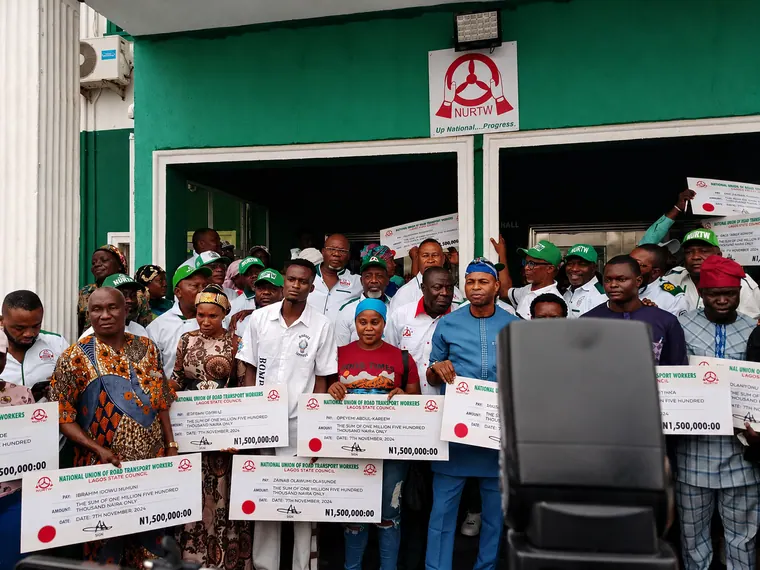
Families of Deceased Officials Support
The widows and families welfare project records one of the most sensitive responsibilities of the Lagos NURTW chairman's office: support for families connected to members who served the union and are no longer alive. Under Alhaji Mustapha Adekunle Sego, the public record includes N42 million presented to 28 widows, with N1.5 million going to each widow. It also includes N1.5 million support packages for families of 25 deceased members and additional assistance extended to a widow whose family matter arose at a welfare event.
This project is not only about money. It is about recognition. A union is built through the effort of people who work in parks, offices, branches, vehicles and corridors across Lagos. When a member dies, the family often carries the burden quietly. A serious welfare structure should not allow those families to disappear from the record.
Purpose of the project
The purpose is to show that service to the union still has meaning after loss. Widows and relatives should be treated with dignity. Support should be organised and presented in a way that respects beneficiaries. Public documentation should show that the office is willing to stand with families, but it should never turn hardship into performance.
The welfare presentations also give members a clear signal. The office is not only concerned with active members who can attend meetings, move around the parks or speak for themselves. It is also concerned with families connected to the union through years of service. That message is important in a transport community where daily work carries risk, pressure and uncertainty.
Why it matters
Financial support can help a family handle immediate needs. It can support food, rent, school fees, medical bills, household debt or small trading plans. It may not solve every problem, but it can give a family breathing space at a difficult time. For a widow, the knowledge that the union remembers her husband or relative can also carry emotional meaning.
The project also strengthens confidence inside the union. Members want to know that their service is valued. They want to see that welfare is not limited to speeches. When support reaches widows and families, the office is showing that welfare can be practical, visible and organised.
Documentation and dignity
The media records from cash-support activities show families, staff, cheques and presentation moments. These records are included because official welfare activity should be documented. At the same time, the language around the project must remain respectful. The focus is not on spectacle. The focus is on duty, dignity and the responsibility of leadership.
The chairman's office can build on this project by keeping welfare files, maintaining beneficiary records and reviewing future family-support needs through branch structures. Branch officers often know member histories and family situations before the state office does. A good welfare system should therefore connect state-level support with branch-level knowledge.
Place in the wider welfare record
This project sits beside vehicle empowerment, driver palliatives, branch relief and park-development work. Together, these records show that welfare has different forms. Sometimes it is a vehicle. Sometimes it is cash support. Sometimes it is attention to park conditions. Sometimes it is a public stance on dignity and conduct.
For Alhaji Sego's office, widows and families welfare support is one of the clearest tests of leadership. It asks whether the union remembers those who served. It asks whether welfare reaches beyond the loudest voices. It asks whether public office can show compassion in a practical way. This project page keeps that record available for members, families, supporters and the wider public.
Follow-through
Family support should continue beyond presentation photographs. The office should keep records, listen through branch structures and treat welfare cases with care. Where families need direction, they should know the official contact path. Where support has been provided, the record should remain clear. This helps protect the dignity of beneficiaries and the credibility of the office. It also gives members confidence that welfare is handled as a responsibility, not as a favour. The strongest version of this project is steady, respectful and properly recorded, with families treated as part of the union community and followed up properly.
Project gallery
The project, in view.
Highlights
- N42m for 28 widows
- N1.5m packages
- Widow support
- Families of late members